UX Design for Wearable Technology: Form Meets Function
- Srushti Patil
- Oct 12, 2023
- 3 min read

In a world where technology inches ever closer to becoming an extension of ourselves, wearable technology has emerged as a groundbreaking category. Smartwatches, fitness trackers, augmented reality glasses, and even smart clothing are becoming an integral part of our daily lives. In this blog, we'll dive into the fascinating realm of User Experience (UX) design for wearable technology and how it's reshaping our interactions with the digital world.

Image source - https://www.shutterstock.com/
The Marriage of Fashion and Technology
One of the unique aspects of wearable technology is its blend of form and function. Unlike traditional gadgets, wearables are often designed to be fashionable, unobtrusive, and seamlessly integrated into our daily attire. UX designers in this field are tasked with making technology fashionable while ensuring that the user experience remains at the forefront.
Microinteractions and Subtlety
Wearable technology excels in microinteractions—those tiny, subtle exchanges between you and your device. From a quick glance at your smartwatch to a subtle vibration signaling a notification, these microinteractions are the essence of wearable UX. They must be unobtrusive, informative, and easy to interpret.
Fitness Wearables and Wellness Tracking
Fitness trackers are perhaps the most common form of wearables. They serve as both motivators and health monitors. UX designers must create intuitive, easy-to-navigate interfaces that display real-time data in a way that motivates users to achieve their fitness goals. These interfaces should also facilitate data sharing with other devices or apps.
Augmented Reality (AR) Glasses
AR glasses are taking wearable technology to new heights. They overlay digital information onto the real world, opening doors to navigation, information retrieval, and more. UX design for AR glasses is about creating non-intrusive interfaces that enhance the real world without overwhelming it. It's about providing contextually relevant information in an unobtrusive manner.
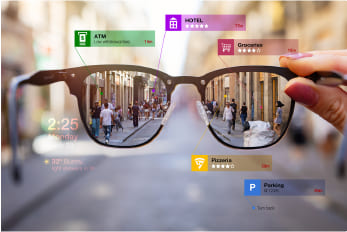


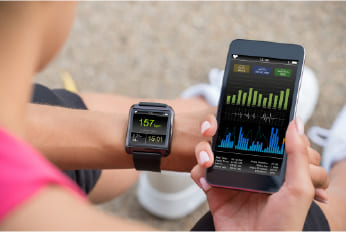

Image source - https://www.shutterstock.com/
Voice and Gesture Interaction
Wearables often rely on voice commands and gesture controls. These interfaces need to be finely tuned to understand and respond to natural human language and movements. They must be responsive, accurate, and easy to use in various conditions.
The Challenges of Limited Screen Real Estate
Wearable screens are tiny in comparison to their smartphone or tablet counterparts. This limited screen real estate requires designers to be creative in conveying information concisely and meaningfully. Prioritization of information is key.
Seamless Data Syncing and Cross-Platform Compatibility
Wearable technology often works in tandem with other devices or apps. UX designers must ensure that data syncing is seamless, and the user experience is consistent across different platforms. Users should feel that they can pick up where they left off, whether on their wearable, smartphone, or computer.
Privacy and Data Security
As wearables collect sensitive personal data, privacy and data security are paramount. UX designers must build interfaces that communicate how data is used, stored, and protected, giving users a sense of control and trust.
The Future of Wearable UX Design
The future of wearable technology holds boundless potential. We're on the cusp of witnessing innovative wearables that assist in healthcare, emergency response, and personal safety. The role of UX designers will continue to evolve, encompassing even more complex interactions and use cases.
In conclusion, UX design for wearable technology is a thrilling convergence of fashion and function. It's about creating digital experiences that are not just user-friendly but also seamlessly integrated into our daily lives. As wearable technology continues to advance, so too will the role of UX designers in shaping the way we interact with our digital companions that go everywhere with us. The future promises wearable technology that is not just useful, but beautiful and comfortable, too.
- Srushti Patil | UI/UX Designer



Comments